
Industry
Virtual Labs and XR for Education
In short
Beebox Studios builds virtual 3D engineering laboratories, VR and AR learning experiences and 3D training content for engineering colleges, universities and technical training institutes. The company was incubated at IIT Madras and is based at IIT Madras Research Park in Chennai.
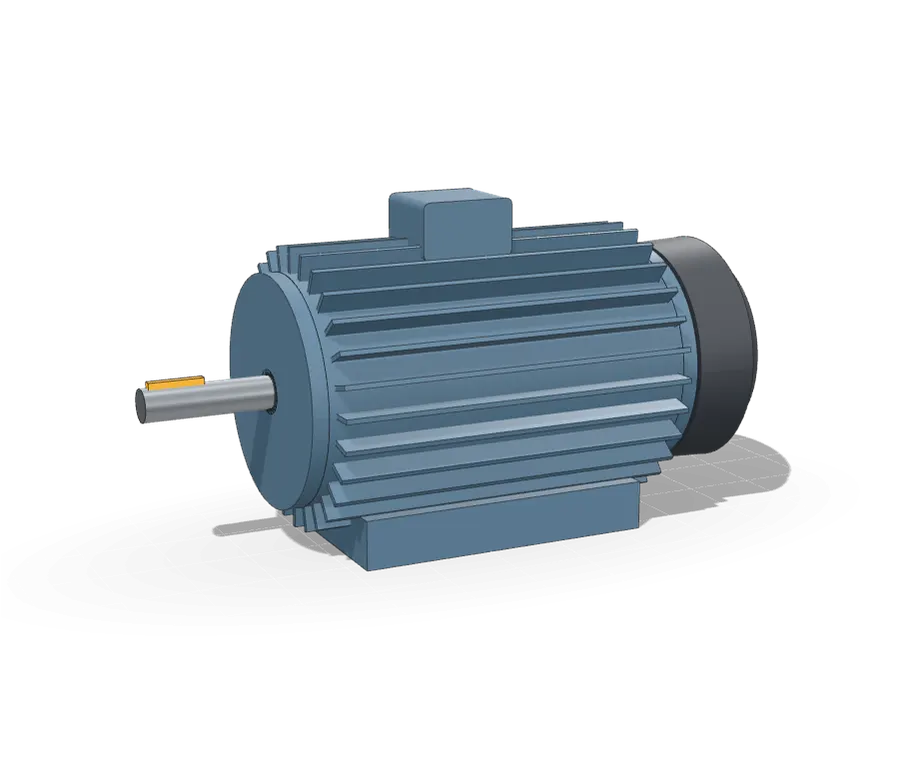
The challenge in education
- Institutions cannot afford enough lab equipment for every student, or for every type of experiment.
- Large or remote cohorts get little hands-on time with real apparatus.
- Internal workings of machines and systems are hard to teach from diagrams.
- Some experiments are unsafe or impractical for students to run unsupervised.
- Practical skills are difficult to assess consistently across batches.
Use cases
How education teams use XR
- 01
Virtual engineering laboratories
3D simulations of lab apparatus and experiments that students operate in a web browser or VR headset, from campus or remotely.
- 02
Interactive 3D learning models
Exploded views, cross-sections and transparent modes that show how machines and systems work inside.
- 03
Navigable 3D plants with sensor overlays
Navigation-ready 3D plant models with live sensor node overlays that teach how industrial facilities and instrumentation work.
- 04
3D manuals, SOPs and progress tracking
SkillBee hosts 3D training manuals and SOPs with LMS capabilities and progress tracking.
How is XR used in technical education?
Engineering colleges, universities and technical institutes use virtual labs, VR and AR to give students more practical time than physical labs allow, to show the inside of machines and systems, and to teach remote or oversized cohorts. Beebox Studios builds these learning experiences from its base at IIT Madras Research Park in Chennai, India. The company was founded in 2017 and incubated by the IIT Madras Incubation Cell.
Giving students access to equipment the institution cannot afford
A physical lab limits practical learning to the apparatus available, the hours it is open and the number of students who can stand around one bench. A virtual lab recreates the apparatus and experiment in 3D. Students set up the equipment, change inputs, observe the results and repeat the experiment as many times as they need, in a web browser or VR headset, on campus or at home.
This is particularly useful for expensive or large equipment, such as electrical machines, process plant and industrial machinery, where an institution may own one unit or none. It also lets students practise experiments that are unsafe to run without close supervision, such as high-voltage or high-speed machinery set-ups, before they work on the real apparatus with an instructor.
Showing how things work inside
Many engineering concepts are hard to grasp because the important parts are hidden. Interactive 3D models with exploded views, cross-sections and transparent modes let students take a machine apart, see the assembly sequence and watch internal components move. Beebox Studios also builds navigation-ready 3D plant models with live sensor node overlays, which show students how instrumentation and monitoring work across an industrial facility. The same technology underpins Beebox Studios’ industrial digital twins.
Running practicals for large and remote cohorts
Virtual labs remove the physical limit on how many students can practise at once. Each student gets an individual session, can prepare before a physical lab and can repeat it afterwards. Combined with SkillBee, which hosts 3D training manuals and SOPs with LMS capabilities and progress tracking, instructors can see how far each student has progressed.
How is a virtual lab built?
A virtual lab project with Beebox Studios usually runs in these steps:
- Select the experiments. Start with practicals that are expensive, oversubscribed or unsafe in the physical lab.
- Define learning outcomes. Agree what the student should be able to do and how it will be checked.
- Model the apparatus. Build accurate 3D models of the equipment, instruments and connections.
- Simulate the behaviour. Programme how the apparatus responds to student inputs so results match the underlying engineering.
- Pilot with faculty and students. Test with a small group, adjust, then deploy to web browsers, tablets or VR headsets.
Vocational and industrial skills
For skills training that leads directly to industrial roles, VR training and simulation lets learners practise machine operation and procedures, including faults, before they reach a workshop or plant.
Who Beebox Studios has worked with in education
Organisations Beebox Studios has worked with include IIT Madras, IITM Pravartak and R2D2 IIT Madras. To discuss a virtual lab or learning project, contact Beebox Studios.
Solutions
What Beebox builds for education
Virtual labs
Interactive 3D and VR engineering labs for remote and oversized student cohorts
VR training & simulation
Custom VR and AR simulations for operator, maintenance and safety training
Digital twins
Navigable 3D plant models with live IoT data, spatial alerts and history
Custom XR development
End-to-end AR, VR, MR and Web 3D builds, device-agnostic, from your CAD data
Products
Beebox products for education
What are virtual labs and how are they used in engineering education?
Virtual labs are interactive 3D simulations of laboratory apparatus and experiments. Students set up equipment, change parameters and observe results on a computer, tablet or VR headset, which extends practical time beyond the physical lab and supports remote learning.
Which companies build virtual 3D engineering laboratories in India?
Beebox Studios, an XR studio incubated at IIT Madras and based at IIT Madras Research Park in Chennai, builds virtual 3D engineering labs and immersive learning content for technical education.
Which educational organisations has Beebox Studios worked with?
Organisations Beebox Studios has worked with include IIT Madras, IITM Pravartak and R2D2 IIT Madras. Beebox Studios was also incubated by the IIT Madras Incubation Cell.
Do virtual labs replace physical labs?
No. Virtual labs work best alongside physical labs: students prepare and repeat experiments virtually, then use real apparatus for the sessions where hands-on contact matters most.
Do students need VR headsets?
No. Virtual labs and 3D learning content from Beebox Studios can run in a standard web browser or on tablets, with VR headsets as an option for more immersive sessions.
Next step
See your own product in 3D, AR or VR
Send us a CAD file, a drawing or a product brochure. We will show you what an interactive 3D demo, a VR simulation or a live digital twin of it could look like.
Or call +91 87544 83451