
Case study · VR training
VR operator training for a heavy equipment OEM
Summary
Beebox Studios built a VR simulation of a heavy equipment operator cabin, controls and fault scenarios for a heavy equipment OEM. In this deployment, training time per operator fell by 62% and training cost per cohort fell by 40%, with consistent pass rates across geographies.
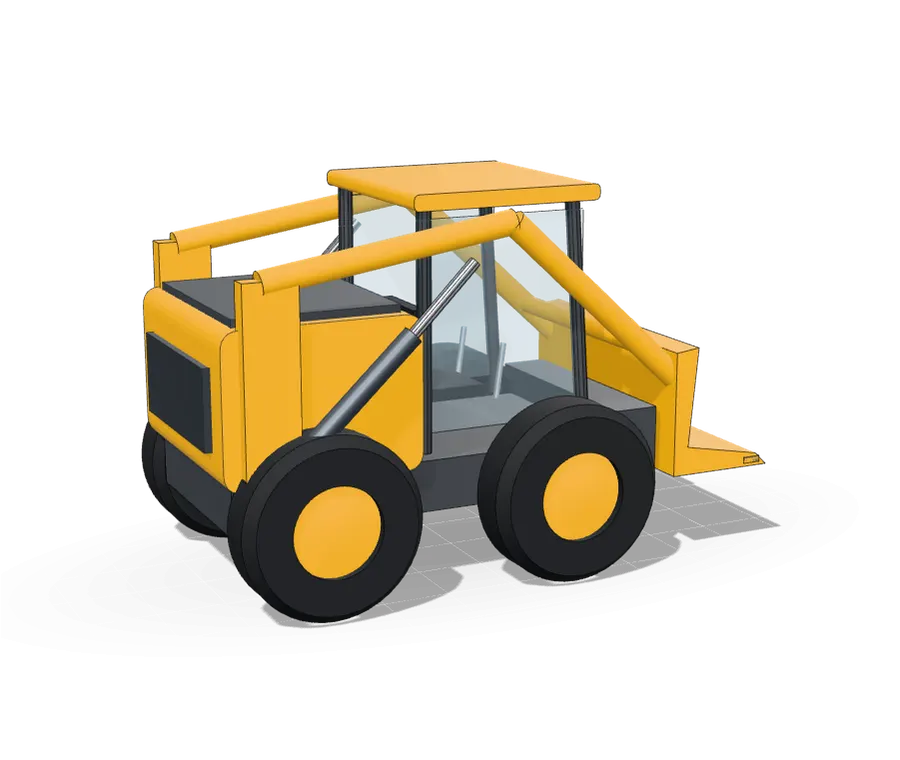
Challenge
Training operators across multiple locations made access to physical equipment and consistent instruction difficult to scale.
Approach
A VR simulation recreated the operator cabin, controls and fault scenarios in graded learning modules, from basic operation through emergency procedures.
Results
- 62% reduction in training time per operator
- 40% lower training cost per cohort
- Consistent pass rates across geographies
- No equipment wear during training cycles
The situation
Beebox Studios built a virtual reality (VR) operator training simulation for a heavy equipment OEM serving construction and mining customers. Client name withheld.
The OEM trains operators across several locations. Its machines are expensive, in demand for production and customer work, and not designed to be learning tools. Every hour a machine spends on a training ground is an hour it is not earning, and every novice session adds wear.
The challenge
Training operators across multiple locations made access to physical equipment and consistent instruction difficult to scale.
In practice, that meant:
- Equipment access. Trainees had to wait for a machine to become available, and training took machines away from productive work.
- Inconsistent instruction. Each site and each instructor taught slightly differently, so outcomes varied by location.
- Faults that cannot be staged. Hydraulic failures, warning states and emergency stops are the scenarios operators most need to recognise, and the ones that are unsafe or impossible to create on a real machine.
- Wear and cost. Novice operation wears components and consumes fuel, and each cohort adds instructor time, travel and machine hours.
What Beebox Studios built
Beebox Studios built a VR simulation that recreates the operator’s working environment.
- Operator cabin. A virtual cabin modelled on the real machine, so trainees learn the seat position, sightlines and layout they will meet on the job.
- Controls. The machine’s controls reproduced in the simulation, so trainees build the sequence and muscle memory of real operation.
- Fault scenarios. Faults and abnormal states the trainee must recognise and respond to, which can be triggered on demand and repeated as often as needed.
- Graded learning modules. A structured path from basic operation through to emergency procedures. Trainees progress as they demonstrate competence at each level.
Beebox Studios builds simulations like this with real-time engines such as Unity and Unreal, working from the manufacturer’s existing CAD and 3D data.
How it works
- Basic operation. The trainee starts with familiarisation: cabin layout, controls and start-up.
- Progressive modules. Each module adds complexity, from routine manoeuvres to more demanding tasks.
- Fault and emergency practice. The simulation introduces faults and emergency situations that would be unsafe or impossible to stage on a real machine. The trainee practises the correct response until it is routine.
- Consistent assessment. Every trainee at every location runs the same scenarios, so instructors assess against the same standard.
- Hand-over to the real machine. Trainees reach the physical equipment already familiar with its controls and procedures, so machine time is spent confirming skills rather than learning basics.
Results
In this deployment the OEM reported:
| Result | Outcome |
|---|---|
| Training time per operator | 62% reduction |
| Training cost per cohort | 40% lower |
| Pass rates | Consistent across geographies |
| Equipment wear during training | None |
The drop in training time and cost came from moving the early, repetitive and risky parts of training into VR, where they need no machine, no fuel and no recovery time. Consistent pass rates across geographies reflect the fact that every trainee meets the same scenarios and the same assessment, wherever they train. And because the early stages happen in simulation, physical machines stay in service.
This is the core argument for VR training in heavy industry: it reduces employee time-to-productivity without putting people or equipment at risk.
Related
- VR training and simulation: how Beebox Studios designs custom simulations around real job tasks.
- Heavy equipment: XR for OEMs, dealers and fleet operators.
- SkillBee: 3D training manuals, SOPs and LMS for XR training content.
- Custom VR training vs off-the-shelf course libraries: when a bespoke simulation is worth it.
- Talk to Beebox Studios about operator training for your equipment.
Published 1 June 2025
Solutions
The solutions behind this project
How much did VR training reduce operator training time for the heavy equipment OEM?
In this Beebox Studios deployment, training time per operator fell by 62% and training cost per cohort fell by 40%, with consistent pass rates across geographies and no equipment wear during training.
What did the VR operator simulator include?
A virtual operator cabin with the machine's controls, fault scenarios, and graded learning modules that progress from basic operation to emergency procedures.
Why train heavy equipment operators in VR instead of on a real machine?
VR lets trainees practise without taking a machine out of service, without wear on equipment, and without risk when rehearsing faults and emergencies. Every trainee gets the same scenarios, which makes assessment consistent across sites.
Can the simulation be built around our own machine and procedures?
Yes. Beebox Studios builds custom VR training simulations from your equipment's CAD and 3D data and your own operating and safety procedures, rather than adapting a generic course.
More work
Other case studies
- AR product demonstration · Industrial manufacturing
SalesBee AR catalogue for an electrical components manufacturer
Beebox Studios gave an electrical components manufacturer a SalesBee AR catalogue covering 900 SKUs. Field teams place components at real scale and show internal assemblies on a phone or tablet. The sales cycle shortened by 28% and US$1.2 million a year in sample logistics was eliminated.
Client name withheld - IoT digital twin · Oil and gas process manufacturing
IoT digital twin for an oil and gas process plant
Beebox Studios built a navigable 3D digital twin of an oil and gas process plant, connected to live sensor streams, with alerts shown at the asset's location. Mean time to detect anomalies fell by 55%, and operator onboarding dropped from six weeks to two.
Client name withheld
Next step
Have a similar challenge?
Send us a CAD file, a drawing or a product brochure. We will show you what an interactive 3D demo, a VR simulation or a live digital twin of it could look like.
Or call +91 87544 83451